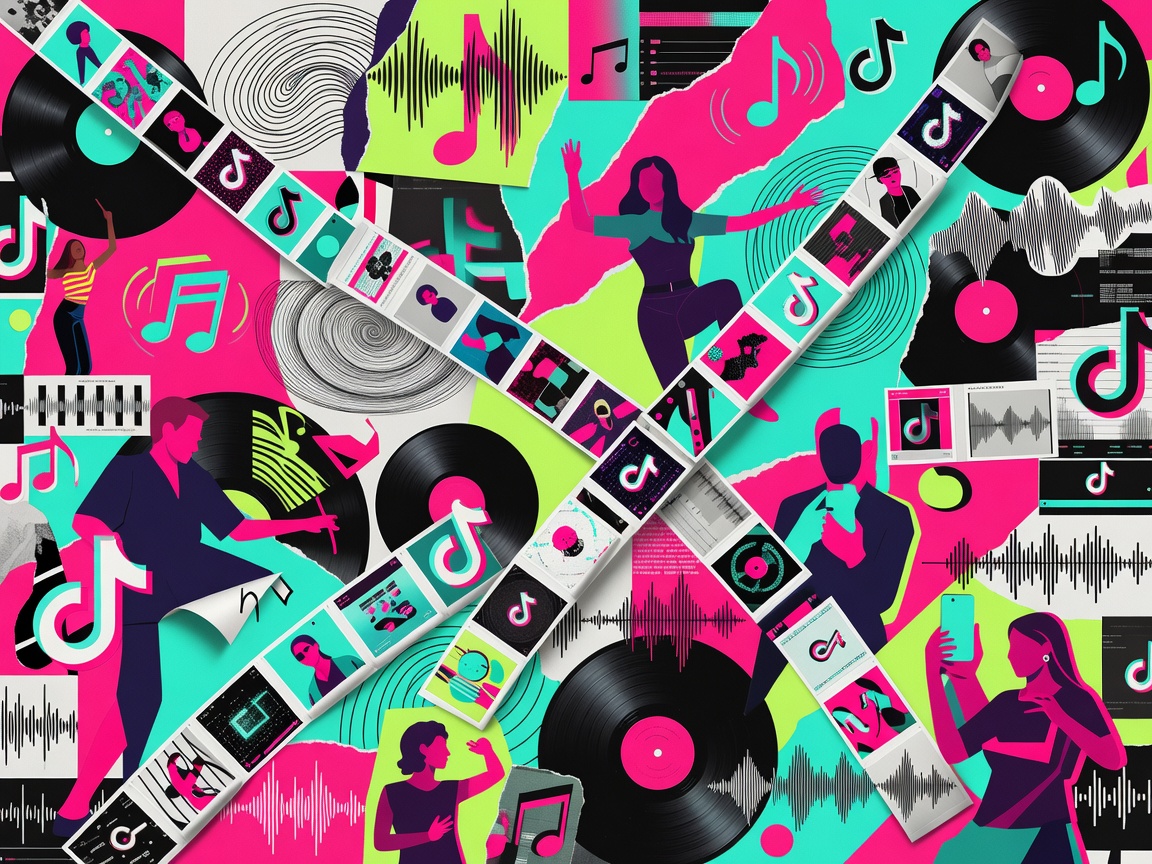
TikTok is a platform, not an artist, yet it has produced one of the clearest pop culture shifts of the century. Its short-video feed made fragments powerful. A chorus, facial expression, edit style, make-up routine, recipe format or dance move can become recognisable before the source work is widely known. The platform therefore changes the route by which fame appears. It can push attention from users to songs, from sounds to artists, and from jokes to mainstream advertising language.
The app’s cultural importance lies in circulation. Earlier platforms also had viral videos, but TikTok standardised reuse through sounds, stitches, duets and templates. A user can copy a structure while adding a small variation. That makes repetition feel productive rather than merely derivative. The result is a stream of recognisable formats that move quickly across music, fashion, comedy and news commentary.
Music discovery
TikTok’s influence on music is visible in the way snippets become entry points. A song may be heard first as a hook under a dance, a transition or a joke. Older tracks can return to public attention when a section fits a trend. New artists can gain visibility if a sound travels beyond their existing audience. Record labels and managers therefore pay attention to how a track can be clipped, repeated and attached to action.
There is a trade-off. A short snippet can bring listeners to a full song, but it can also detach the most memorable section from the whole composition. Songs may be written or marketed with clip potential in mind. That can produce efficient hooks, but it may also narrow the way music is judged. The platform rewards immediate recognition, not necessarily long-form development.
Creators and unstable visibility
TikTok fame can appear sudden because distribution is not limited to followers. A video can travel through recommendation before the creator has an established audience. This changes the public idea of celebrity. Visibility can be built from repetition, niche knowledge, comic timing, style advice or participation in a shared sound. It can also vanish quickly if the format stops circulating.
Named creators such as Charli D’Amelio showed how dance-based visibility could move from the app into television, brand work and other media. Other creators remain known mainly inside platform subcultures. The platform therefore produces different levels of fame: one-clip recognition, niche authority, cross-platform creator status and conventional celebrity extension. These should not be treated as the same outcome.
Comparison with other systems
Compared with Marvel Studios, TikTok has weak central narrative control. It does not need a shared universe; it needs repeatable formats. Compared with Taylor Swift’s era system, TikTok is less stable and less catalogue-driven. A Swift song can become a trend, but her public structure does not depend on the platform alone. Compared with BTS fandom, TikTok coordination is looser. Participation is often built around templates rather than named fan communities.
The platform also changes criticism. A critic cannot only ask whether a work is complete. They must ask how a fragment functions, who can reuse it, and what the reuse does to the original. A sound attached to humour may alter the public meaning of a serious song. A dance may make a track visible while shifting attention away from the musician. A trend can give unpaid promotion while raising questions about credit and attribution.
How to read TikTok fame
- Identify the unit: decide whether the object of fame is a person, sound, format, dance, phrase or edit style.
- Look for reuse: a trend depends on variation by many users, not just one popular upload.
- Separate reach from durability: wide circulation does not automatically produce a lasting career.
- Check source context: a clip may travel without the full song, original joke or creator credit.
TikTok’s place among pop culture icons is therefore systemic. It made the fragment a major engine of attention and trained audiences to recognise culture in loops, templates and sounds. The platform’s power is real, but it is volatile by design.